StocksExplainer
How do stock exchanges work, and what happens after you press buy?
Stock exchanges match buyers and sellers. See how bids, asks and the spread work, where brokers send your order, and how a trade settles in the U.S.

Quick answer
A stock exchange is a regulated marketplace where buy and sell orders meet. Buyers post bids, sellers post asks, and a trade happens when they match. Your broker routes your order to an exchange or another venue, and in the U.S. the trade settles one business day later.
Key points
- An exchange is a marketplace where securities are bought and sold; in the U.S., national exchanges register with the SEC.
- Every quote has a bid (best price a buyer offers) and an ask (best price a seller accepts); the gap is the spread.
- Your broker may send your order to an exchange, a market maker, an electronic network or its own inventory, and must seek best execution.
- Regular U.S. trading hours run from 9:30 a.m. to 4:00 p.m. Eastern Time; extended hours carry extra risks.
- Since May 28, 2024, most U.S. stock trades settle one business day after the trade (T+1).
What is a stock exchange?#
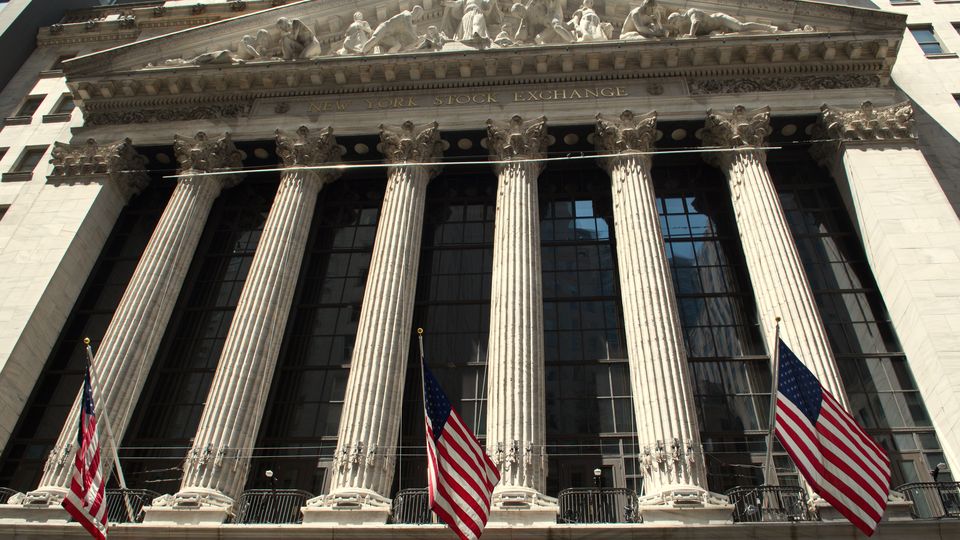
The SEC's investor site defines securities exchanges as markets where securities are bought and sold[1]. An exchange does not own the shares or set their value. It provides the rules and the matching system that let millions of buyers and sellers find each other at an agreed price.
In the U.S., a national securities exchange is one that has registered with the SEC under Section 6 of the Securities Exchange Act of 1934[2]. The SEC's list, last updated in January 2026, includes familiar names such as the New York Stock Exchange and The Nasdaq Stock Market, along with Cboe, NYSE Arca, Investors Exchange, MEMX and the Texas Stock Exchange — more than 20 exchanges in all[2]. Rules differ by country; other markets have their own exchanges and regulators.
Exchanges also set standards for the companies they list. FINRA notes that companies listing on Nasdaq, the NYSE, Cboe or other registered national exchanges generally have to meet defined quantitative standards[3]. Stocks that are not listed may be quoted over the counter instead, and many of those trade infrequently and can be hard to sell[3].
How did today's exchanges come about?#
The oldest U.S. exchange started with a handshake agreement. Today's trading is mostly electronic, but the basic job — matching buyers and sellers — has not changed.
- 1792
The NYSE traces its origins to the Buttonwood Agreement, signed by 24 stockbrokers on May 17, 1792[4].
- 1971
Nasdaq is founded as the world's first fully electronic quotation system[5].
- 2005
The NYSE launches its Hybrid Market, a blend of floor-based auction and electronic trading[4].
- 2024
U.S. stock trades move to a one-business-day settlement cycle (T+1) on May 28, 2024[6].
How are stock prices quoted: bid, ask and spread?#
At any moment, a stock has two prices, not one. The bid is the highest price a buyer will pay for a specified number of shares, and the ask is the lowest price at which a seller will sell[7]. The difference between them is called the spread[7]. The "price" you see in an app is often the last trade, which can differ from both.
Behind the quote sits a list of waiting orders, often called the order book. Buyers' limit orders stack up below the current price; sellers' limit orders stack up above it. When a new order arrives that is willing to trade at a waiting price, the exchange matches the two and a trade prints.
Worked example
A simple order book
Suppose sellers are offering 200 shares at $50.02, 400 at $50.03 and 500 at $50.05, while buyers bid for 300 shares at $50.00 and 500 at $49.99. The spread is $0.02 and the midpoint is $50.01. A market order to buy 100 shares fills at $50.02. A market order to buy 400 shares takes all 200 shares at $50.02 and 200 at $50.03, for an average of $50.025.
| Order | Shares filled at each price | Total cost | Average price |
|---|---|---|---|
| Buy 100 at market | 100 at $50.02 | $5,002.00 | $50.0200 |
| Buy 400 at market | 200 at $50.02 + 200 at $50.03 | $20,010.00 | $50.0250 |
Figures computed in code from the stated inputs; rounded to the nearest cent or tenth.
Buying at the ask and selling right away at the bid would cost the spread: $0.02 a share, or $2 on 100 shares in this example. In a busy, liquid stock the spread is usually small. In thinly traded stocks it can be much wider, which is one reason the order type you choose matters.
Where does your broker send your order?#
You cannot send an order to an exchange yourself; a broker does it for you. Broker-dealers charge a fee to handle trades between buyers and sellers of securities[1]. The SEC explains that for a stock listed on an exchange, your broker may direct the order to that exchange, to another exchange, or to a market maker[8] — a firm that stands ready to buy or sell a stock at publicly quoted prices[9].
| Venue | What it is | What to know |
|---|---|---|
| National securities exchange | A market registered with the SEC under Section 6 of the Exchange Act | Examples include the NYSE and The Nasdaq Stock Market |
| Market maker | A firm that stands ready to buy or sell at publicly quoted prices | Some pay brokers for order flow — perhaps a penny or more per share |
| Electronic communications network (ECN) | A system that automatically matches buy and sell orders | Often used for limit orders |
| Internalization | Your broker fills the order from its own inventory | The order never reaches an outside venue |
| Alternative trading system (ATS) | A system that meets the definition of an exchange but operates under an exemption | Not registered as a national securities exchange |
Some market makers pay brokers for routing orders to them; the SEC calls this payment for order flow[8]. Whatever the route, your broker has a duty to seek the best execution reasonably available for customers' orders[8]. Note what the SEC does not promise: its regulations do not require a trade to be executed within a set period of time[8].
The life of a buy order
When can you trade, and what happens after the trade?#
Regular trading hours for stocks on U.S. exchanges run from 9:30 a.m. to 4:00 p.m. Eastern Time[10]. Some brokers also offer extended-hours sessions before and after. The SEC warns that reduced trading interest in those sessions generally means wider spreads between bid and ask, and many brokers accept only limit orders then to protect investors from unexpectedly bad prices[10].
Matching is not the end of a trade. Settlement is the official transfer of securities to the buyer's account and cash to the seller's account[6]. Since May 28, 2024, most U.S. securities trades settle one business day after the trade date, a cycle called T+1; before that it was two business days[6]. The SEC's own example: if you sell shares on Monday, the trade settles on Tuesday[6].
Who protects investors in this system?#
In the U.S., the SEC registers national exchanges[2] and requires public companies to file regular reports that anyone can read free on EDGAR[11]. FINRA suggests EDGAR as a good place to start researching a company[3]. These rules make prices and company information public; they do not make any stock safe. Prices still move on news, fear and hope — see what a stock is for the risks of ownership itself.
What mistakes do beginners make?#
Assuming the last price is the price you will get
The number on the screen is usually the last trade. A market buy fills at the current ask, and a large order may fill at several prices.
Ignoring the spread
Every round trip — buy, then sell — costs about the spread, on top of any commission. In thinly traded stocks this can be a noticeable share of the price.
Trading in extended hours without a limit
Fewer participants mean wider spreads and bigger price jumps. Use limit orders if you trade outside regular hours at all.
Spending sale proceeds before settlement
A sale is not final until it settles, one business day later in the U.S. Plan withdrawals around that delay.
What else do beginners ask?#
Do I buy shares from the company on an exchange?
Usually not. Exchanges are secondary markets, where existing shares change hands between investors[12]. The company receives money only when it first sells new shares.
What is payment for order flow?
It is when a market maker pays your broker for sending your order to it, perhaps a penny or more per share, according to the SEC[8]. Your broker still has a duty to seek best execution.
What are regular U.S. stock market hours?
9:30 a.m. to 4:00 p.m. Eastern Time on trading days[10]. Extended sessions exist but usually have less trading and wider spreads.
What does T+1 mean?
Trade date plus one business day: the deadline for shares and cash to change hands. The U.S. moved to T+1 on May 28, 2024[6].
What is the bottom line?#
A stock exchange is a rule-bound meeting place for buy and sell orders. Prices come from bids and asks; your broker chooses where to send your order and must seek the best execution available; and in the U.S. the trade settles one business day later. Knowing these steps helps you read a quote, choose an order type and avoid paying more than you meant to.
Sources
Numbers in brackets in the text point here. Grade A = primary source (regulator, statistics agency, law or official document).
- 1
- 2
- 3
- 4
- 5
- 6
- 7
- 8
- 9
- 10
- 11
- 12